Friday, February 5, 2016
Pasar tradisional
Kemarin saya menyarankan seorang teman Indonesia say, kami pergi ke pasar tradisional yang tidak jauh dari kost saya di Kota Mataram, Lombok.
Yesterday I suggested to an Indonesian friend that we go to a traditional market that is not far from my kost in Mataram, Lombok.
Saya suka berkunjung ke tempat seperti itu: itu sebuah tempat yang bagus untuk melihat barang-barang dan kegiatan yang biasa .
I like to go to places like that: it is a good place to see ordinary things and activities.
Saya tidak masak di kost, hanya membuat kopi dan makan kerupuk dan penganan lain, karena makanan di jalan sangat enak; saya juga sering diajak makan dengan teman-teman.
I don’t cook in accommodation, only make coffee and eat chips and other snacks, because street food is very good; also I am often invited to eat with friends.
Oleh karena itu, saya sangka mungkin tidak ingin beli banyak barang di pasar adat itu.
Therefore I thought maybe I would not wish to buy many things from the market.
Akan tetapi, saya didorong oleh penjual-penjual supaya saya membeli hampir lebih daripada saya dapat membawa.
However, I was convinced to buy almost more than I could carry.
Kalau saya berhenti di depan seorang penjual jadi perhatian saya terhadap daganannya jelas kelihatan, penjual itu menjadi sungguh meyakinkan.
If I stop in front of a seller, the seller became so persuasive.
Ada penganan enak untuk makan siang, bungkusan kopi tubruk yang akan membawa ke Australia, piring-piring dan cangkir yang baru untuk kost teman, buah-buahan segar, dan kerupuk.
There was delicious snack for lunch, packets of coffee which I will take to Australia, new plates and a cup for friends’ kost, fresh fruit, and chips.
Saya melihat banyak jenis makanan: tempeh yang berbungkus di bungkusan panjang dan juga tersedia sebagai paket kecil yang bersiap memasak; nangka yang sudah lapisan lengket dihapus; aneka jenis lombok; nanas; tangan-tangan pisang; kol; bawang putih; bawang merah; juga sayur-sayuran yang belum tahu.
I saw very many types of food: tempeh which is wrapped in long packages and also available as small packet ready for cooking; jackfruit whose sticky layer has been removed; various types of chilli; pineapple; hands of bananas; cabbage; garlic; shallots; also vegetables that I don’t know.
Ada peralatan dapur, termasuk sejenis pisau yang kelihatan berbahaya sebab mata pisau dan tangkai diikatkan dengan kawat saja.
There are kitchen tools, including a type of knife which appears dangerous because blade and handle were attached only with wire.
Dikarenakan memakai sarung adat dan berias rambut sebagai jalinan, beberapa penjual menyebut-nyebut tentang penampilan saya.
Because I wear traditional sarong and arrange my hair in plaits, several sellers commented about my appearance.
Sebenarnya, mereka ingin tahu tentang saya, dan bertanya kepada teman saya.
Naturally, they wish to know about me, and ask my friend questions.
Saat kami pergi keluar, ada dua cidomo yang menunggu untuk penumpang.
When we went outside, there were two horse-drawn carts waiting for passengers.
Biasanya rupa cidomo menarik sekali, dengan hiasan berwarna-warna, walaupun warna merah warna yang lebih populer.
Usually the appearance of horse-drawn carts is very attractive, with colourful decorations, though red is the most popular colour.
Cidomo masih sesuatu yang biasa di jalan-jalan Lombok ini sebab ada banyak jalan yang sempit, apalagi di kota Ampenan dan Cakranegara, kotanya yang di setiap sisi Kota Mataram, jadi digunakan oleh orang lokal lebih sering daripada oleh wisatawan.
These horse-drawn carts are still common in streets of Lombok because there are many narrow roads, especially in Ampenan and Cakranegara, the cities on each side of Mataram, so are used by the local people more often than by tourists.
Selain sepeda, cidoma hanya kendaraan yang memperbolehkan di tiga gilinya yang lebih terkenal: Gili Air, Gili Trawangan dan Gili Meno.
Besides bicycles, horse-drawn carts are the only vehicles allowed in the three most famous Gili: Gili Air; Gili Trawangan; Gili Meno.
Kudanya yang digunakan dengan kendaraan ini dipelihara di Pulau Lombok diri.
The horses which are used for these vehicles are bred in Lombok itself.
Pastinya, cidomo adalah kendaraan yang memberikan minat dan warna di jalan-jalannya, tetapi juga berguna untuk orang semuanya, sama dengan pasar tradisional, jadi semoga akan terus terlihat.
Certainly, horse-drawn carts provide interest and colour in the streets, but are also useful for everyone, just like the traditional markets, so I hope will continue to be seen.
Tuesday, February 2, 2016
WAKATOBI
WAKATOBI, Sulawesi Tenggara
Wakatobi is composed of 4 main islands – WAngi Wangi, which has the capital, Wanci: KAdelupa: TOmia: BIlongi.
Ekeng and I flew to Wanci, and stayed with Wandi and his family, good friends of Linda’s and Yasril’s. Their house was amazingly well-suited to the climate, with thick walls, no ceiling, a high roof and no eaves. Even the mozzies didn’t find me on the first night.
Wandi took us to the resort of Patuno to see the coastline, and later we went to the popular local beach to snorkel. Even though there was constant traffic from the many ski and banana boats that provide local entertainment, the coral and marine life seems to be healthy, with no fish bombing damage.
Next day Ekeng and I went on the small local ferry to Tomia – 50 or so people in a low-ceilinged modern fibreglass boat with inadequate ventilation. After 3 hours, I think everyone was relieved to get a good dose of oxygen.
We were met in Tomia, and transported by sepeda motor to Desa Kulati at the other end of the island where Ekeng is well-known as producer of their eco-tourism movie. Bapak Tua, the community leader, was proud to show the certificate won by the village for their efforts in eco-tourism development.
From the cliff top near the village we had a clear view of fish in the water below, with large chunks of land that have fallen off over time making many green islets along the coastline.
The tradition of coffee-making in Tomia is a little unusual, even in Indonesia: each person is supposed to know how they like it, so hot water, kopi tubruk [ground coffee] and gula pasir [white sugar] – but no susu [milk] – is provided to make your own
My homestay was 3 houses away from Ekeng’s, so I was still able to hear his distinctive laugh at midnight. I was up before 6.00, not quite early enough to see the sunrise.
We went out in a fishing boat along the coast to snorkel. Hanafi and Kazman, our local guides, were like fish themselves, diving deep with only the snorkel. The variety of fish and coral is enormous, with the remains of a shipwreck a popular spot to visit – I saw my first Lion Fish.
There is some fish bombing damage but this practice is now banned within the Wakatobi waters, a ban that is certainly enforced by this village.
Villagers brought lunch to the beach by motorbike – rice and grilled fish and vegetables – which we ate on the coral sand beach under the cliffs.
Ekeng talked with the village leaders, recording their traditional stories for me. I plan to translate them to return them to the community as bilingual stories. I hope this will preserve the particular stories related to this village, and also encourage the local children to learn English.
Next day it was time to return to Wanci, thankfully in a boat with only about 12 people, so there was far less “kepanasan” [heat stress] for everyone.
Next day, we visited Pulau Kambode, an island opposite the port of Wanci, which though only small, boasts entrance gates to co-joined villages of tidy paved narrow streets suited to the principal vehicles, sepeda and sepeda motor [bicycle and motor bike] with fenced yards and wooden houses.
With a detailed map of the island at the port and signs encouraging everyone to “leave only footprints”, tourism is clearly a priority. We hired a tiga roda [3 wheeler] whose driver was aged about 12, with crew of 2 younger boys. We sat on planks across the back of the tray, travelling along the flat shoreline road to a large shallow lake, Danau Tailaronto’oge, which teemed with small fish. It also had jellyfish, so must have connection with the sea, through the coral.
The ferry back to Wanci had a crew of two; one aged about 25, the other a boy who surely couldn’t have been more than 6, who barely had the strength to push us off from the pier. However he piloted the boat very capably, though his view was restricted by the spokes of the wheel and the passengers.
At the keraton (original place of government) in Wanci’s hilltop village of Liya, we met the Kepala Desa [village head] and a local historian. The magnificent old trees make it a beautiful place, with significant walls still standing, even though they were built without any bonding material. Founded in 12th Century by a Raja from Pulau Buton, there are certainly stories to be collected there next time.
Near the airport are 3 very small islands with walking access at low tide: Linda, Yasril and friends stayed there for a night. After more, even better, snorkelling, and wonderful food, especially local specialties of kasuami from cassava, and heloa sari [with fish and coconut], it’s not surprising we were sad to leave.
So glad I have finally visited Wakatobi that I have heard so much about. Thanks to good friend Ekeng.
Wednesday, December 30, 2015
Finishing daughter Linda's movie, Rawa Kehidupan
Return to Linomoyo
Lepmil crew and I went to Linomoyo in Konawe Utara, Sulawesi Tenggara, to complete filming of Linda's movie "Rawa Kehidupan", in 2011.

Uki and Ekeng: Coffee stop on the road from Kendari
I promised I would return one day. The community leader Pak Taufiq said "Learn Indonesian and come back and talk with us". But when I finally got back there to thank him for his inspiration, Pak Taufiq was absent on a visit to South Sulawesi.


Village life, and the 10 point village program
Ekeng [the movie director] Jhoni and Uki who were part of the support crew, and I were able to see much development and increase in prosperity in the village.


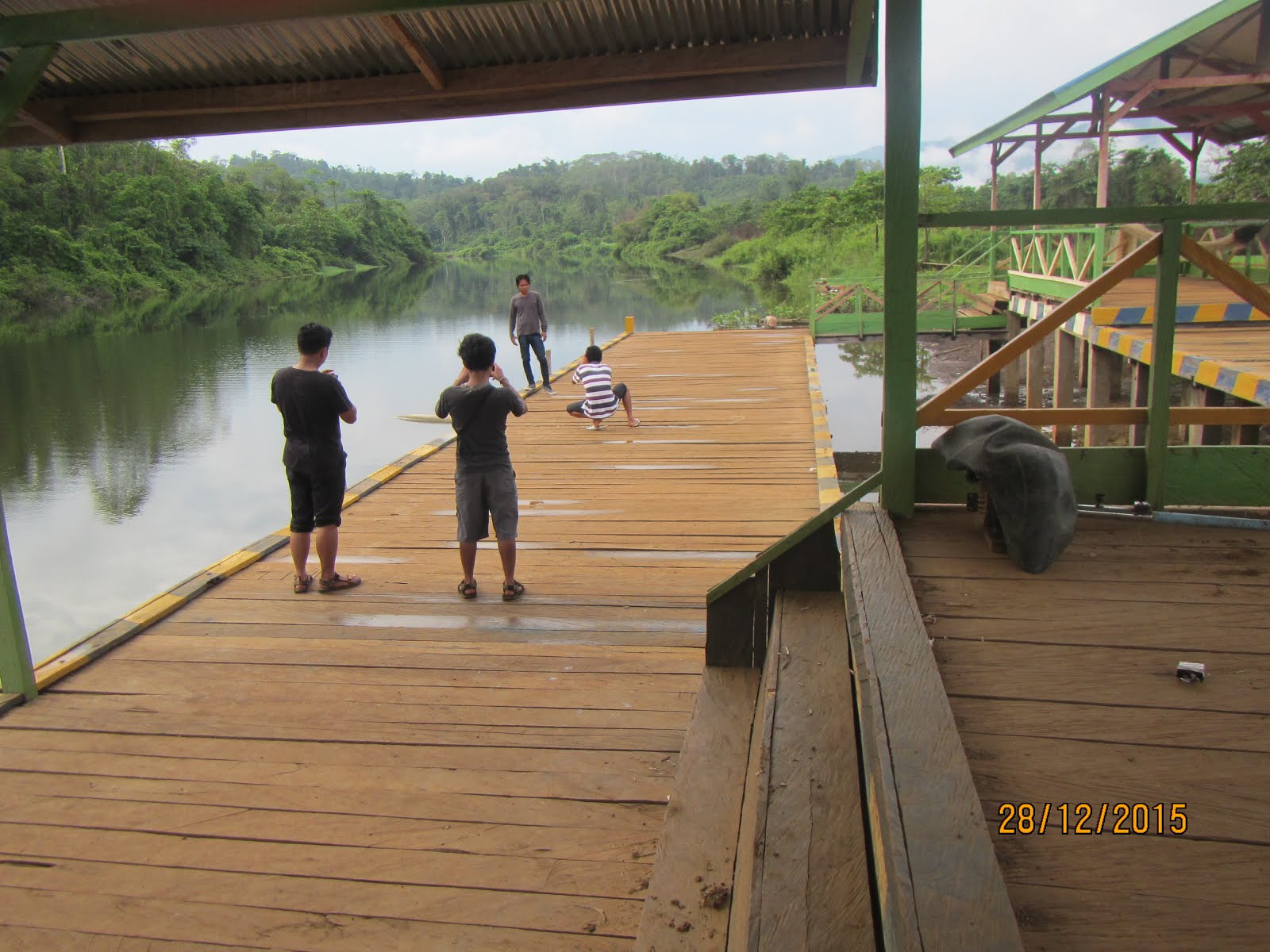
A substantial dermaga, or pier, has been built on the river; there are new houses including a large one for the Village Head [Kepala Desa] Pak Sumardin; there are new areas of sawah and other crops; and last year there was a very popular local fishing competition.


This is the "dermaga", built to facilitate the fishing industry that is the real wealth of the village at the moment.
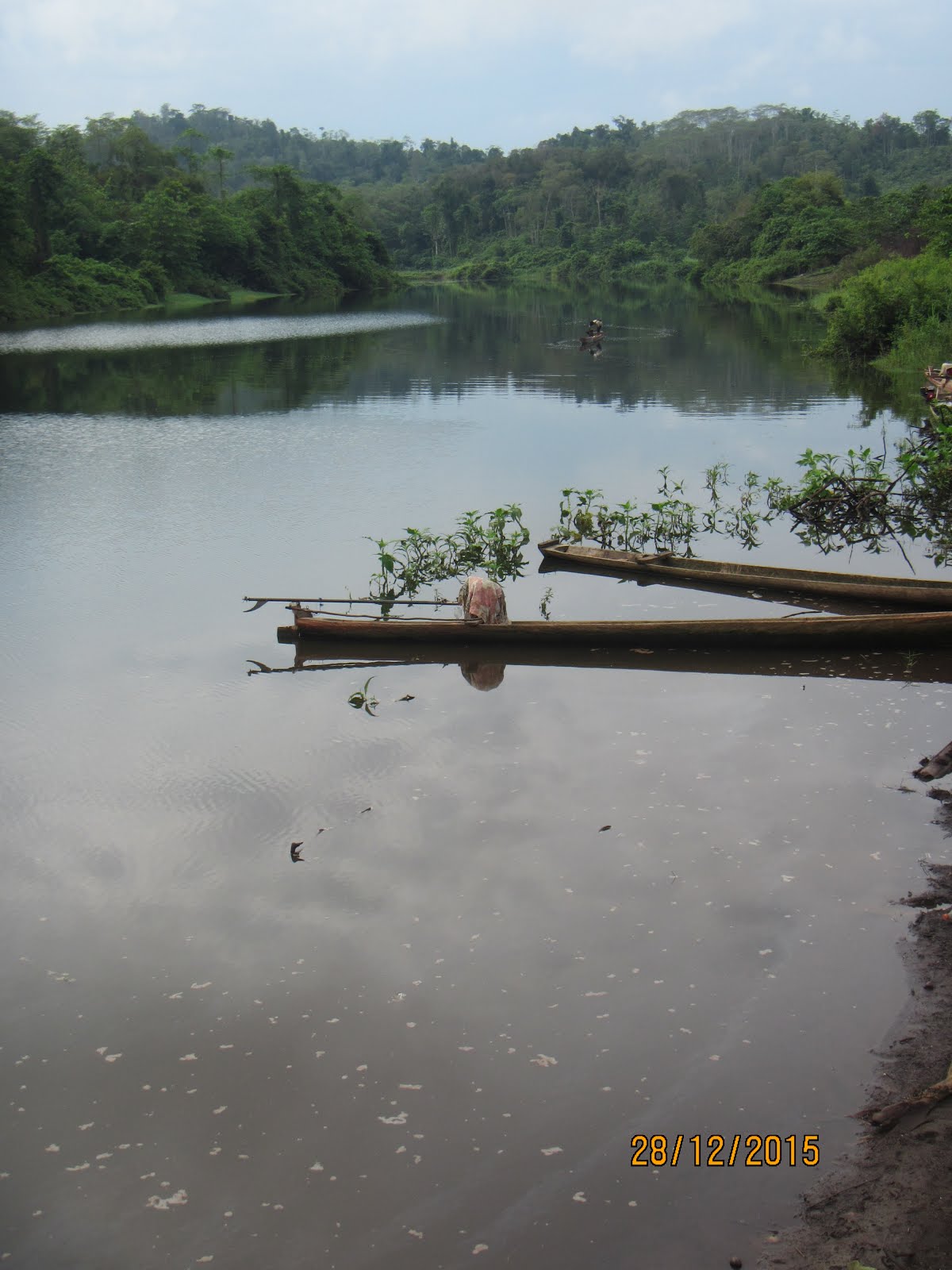
Pak Sumardin never did support the offer of a Chinese company to mine the limestone of the mountains which inspired "Rawa Kehidupan". But now he is supported by the rest of the village to establish an eco-tourism industry based around the river and swamp, forest and lakes, limestone mountains and caves once inhabited by ancient peoples, and birdlife.


Ekeng recorded the traditional stories recounted by Pak Sumardin and Pak Idris, which Ekeng will transcribe. I will translate and return them to the community as bilingual stories so they will not be lost to future generations as they learn other languages.
0ur dinner, a magnificent example of river fish called 'mas', arrived, carried by a proud fisherman who was delighted to have not only a receptive audience but one which was ready to buy his catch.


Fisherman and fish, and the River Lalindu.
This beautiful little lake, such an amazing colour, is in the middle of the new cropland.


Blue Lake in Linomoyo
Unfortunately I picked up a tummy bug so we had to leave after only one night. However we did achieve the main purposes of our visit: an update on the village affairs and the traditional stories.

A seriously beautiful place!


Thanks to Lepmil crew Anwar Sufriyadi Landimuru, Kaka Ekeng, Jhoni Egas and driver Nyoman for their patience and care.


Lepmil crew and I went to Linomoyo in Konawe Utara, Sulawesi Tenggara, to complete filming of Linda's movie "Rawa Kehidupan", in 2011.
I promised I would return one day. The community leader Pak Taufiq said "Learn Indonesian and come back and talk with us". But when I finally got back there to thank him for his inspiration, Pak Taufiq was absent on a visit to South Sulawesi.
Early morning - just before the mountain cloud, and my tummy bug, arrived. The thumb-like lump on that mountain is said to be growing taller, so I want to compare next time!
Village life, and the 10 point village program
Ekeng [the movie director] Jhoni and Uki who were part of the support crew, and I were able to see much development and increase in prosperity in the village.
Pak Sumardin's large house - room for his growning family, but consternation at least for me - no bathroom! Not even running water. Maybe next time ...
A substantial dermaga, or pier, has been built on the river; there are new houses including a large one for the Village Head [Kepala Desa] Pak Sumardin; there are new areas of sawah and other crops; and last year there was a very popular local fishing competition.
This is the "dermaga", built to facilitate the fishing industry that is the real wealth of the village at the moment.
Pak Sumardin never did support the offer of a Chinese company to mine the limestone of the mountains which inspired "Rawa Kehidupan". But now he is supported by the rest of the village to establish an eco-tourism industry based around the river and swamp, forest and lakes, limestone mountains and caves once inhabited by ancient peoples, and birdlife.
A large pink heron Merging of swamp, river, mountains and sky
Ekeng recorded the traditional stories recounted by Pak Sumardin and Pak Idris, which Ekeng will transcribe. I will translate and return them to the community as bilingual stories so they will not be lost to future generations as they learn other languages.
0ur dinner, a magnificent example of river fish called 'mas', arrived, carried by a proud fisherman who was delighted to have not only a receptive audience but one which was ready to buy his catch.
Fisherman and fish, and the River Lalindu.
This beautiful little lake, such an amazing colour, is in the middle of the new cropland.
Blue Lake in Linomoyo
Unfortunately I picked up a tummy bug so we had to leave after only one night. However we did achieve the main purposes of our visit: an update on the village affairs and the traditional stories.
A seriously beautiful place!
Thanks to Lepmil crew Anwar Sufriyadi Landimuru, Kaka Ekeng, Jhoni Egas and driver Nyoman for their patience and care.
Subscribe to:
Posts (Atom)